EXTENDED WORKING TIME
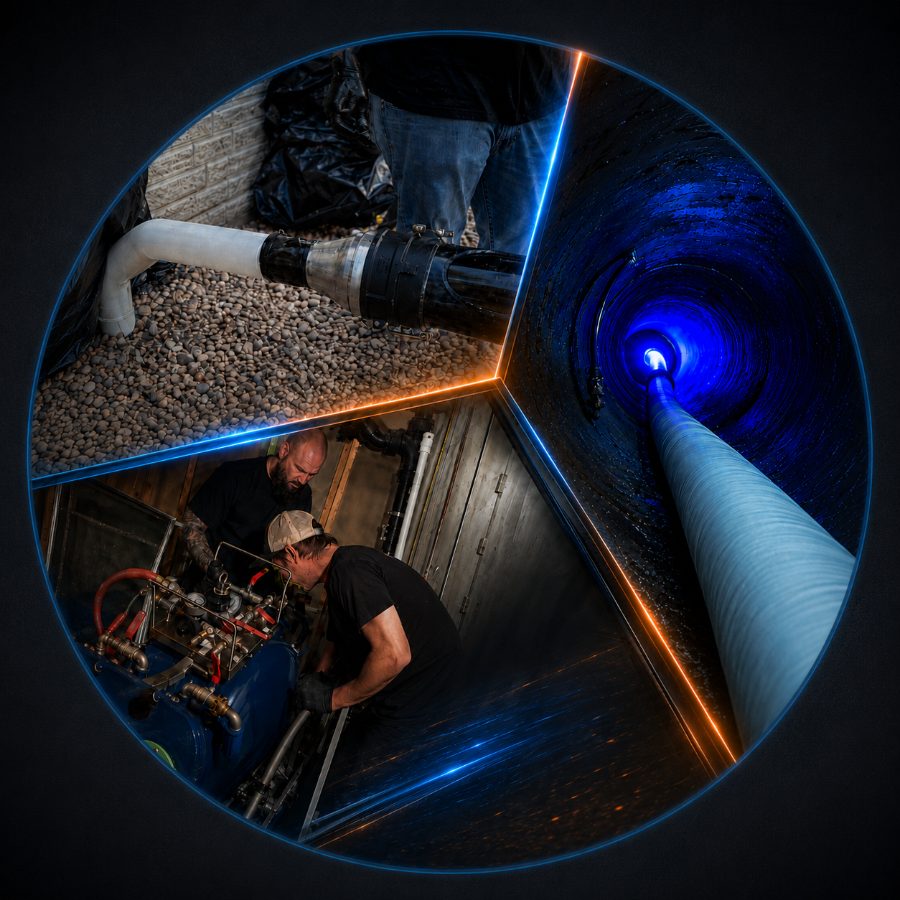
The resin remains workable until the Bluelight LED curing process begins, reducing installation time pressure before the liner is permanently cured.
Colorado-owned and founded. Specialized in sewer & drain restoration for Northern Colorado & Denver.
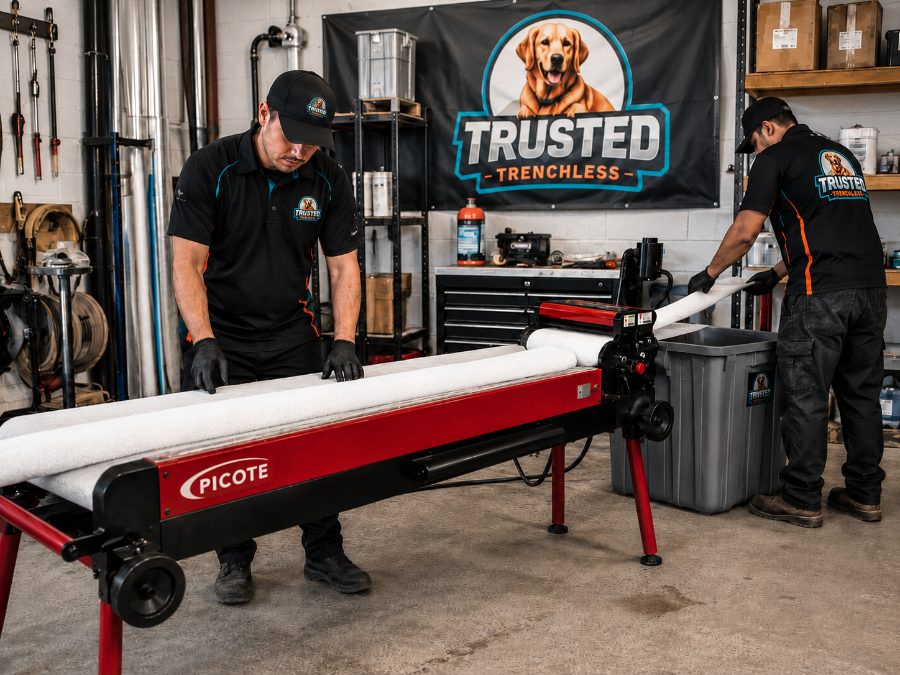
Trusted Trenchless uses the Bluelight LED CIPP system for qualifying sewer laterals and small-diameter drain lines. Its specially formulated resin is designed to remain workable until it is exposed to blue-wavelength LED light, giving the installation team more control during liner wet-out, placement, and pre-cure inspection.
After the liner is correctly positioned, the onboard system automatically controls the LED curing head’s pullback through the pipe. Under qualifying conditions, manufacturer-published performance information indicates that a 50-foot liner may be fully cured in under 12 minutes—up to five times faster than conventional curing methods.
That figure refers only to the liner-curing phase, not the total project. Camera evaluation, cleaning, preparation, access, liner installation, any required branch reinstatement, and final verification still determine the overall schedule.
The resin remains workable until the Bluelight LED curing process begins, reducing installation time pressure before the liner is permanently cured.
The onboard computer sets and controls the curing head’s pullback speed using the applicable job parameters.
A camera built into the LED light head supports visual monitoring as the curing equipment travels through the installed liner.
Manufacturer-published information reports 500 systems in the field and millions of feet of Bluelight liner installed worldwide.
Performance and adoption figures are based on manufacturer-published information. Actual results vary by project, approved liner specification, and field conditions.
A failing sewer line may already be decades into its service life before the first major problem appears. CIPP changes that equation by creating a new, continuous liner inside the existing pipe rather than asking the deteriorated host pipe to keep doing all the work.
NASSCO states that a properly designed, installed, and tested CIPP lateral has a minimum life expectancy of 50 years. U.S. EPA long-term evaluations of in-service CIPP have also produced results consistent with reaching the industry's typical 50-year design-life benchmark and potentially performing beyond it.
Bluelight's manufacturer likewise describes the finished liner system as having a service life of at least 50 years.
A properly designed, installed, and tested CIPP lateral is expected to provide at least 50 years of service under appropriate conditions.
For qualifying projects, CIPP can be engineered as a fully structural stand-alone pipe-within-a-pipe rather than relying on a deteriorated host pipe for structural support.
The cured liner forms a continuous, jointless pipe through the rehabilitated segment, eliminating the old pipe joints from the lined flow path.
CIPP has been used for more than 50 years, and long-term field evaluations continue to support the industry's 50+ year design-life benchmark.
Instead of excavating and replacing an entire aging sewer line, qualifying CIPP projects can renew the damaged pipe from the inside—creating a new structural system designed to provide decades of additional service.
Expected service life is an engineering and performance benchmark, not a guarantee of a specific lifespan. Actual performance depends on liner design, host-pipe condition, installation quality, use, maintenance, external loads, soil and groundwater conditions, and other project-specific factors. Service-life statements are based on published NASSCO guidance, U.S. EPA CIPP performance research, and Bluelight manufacturer information.
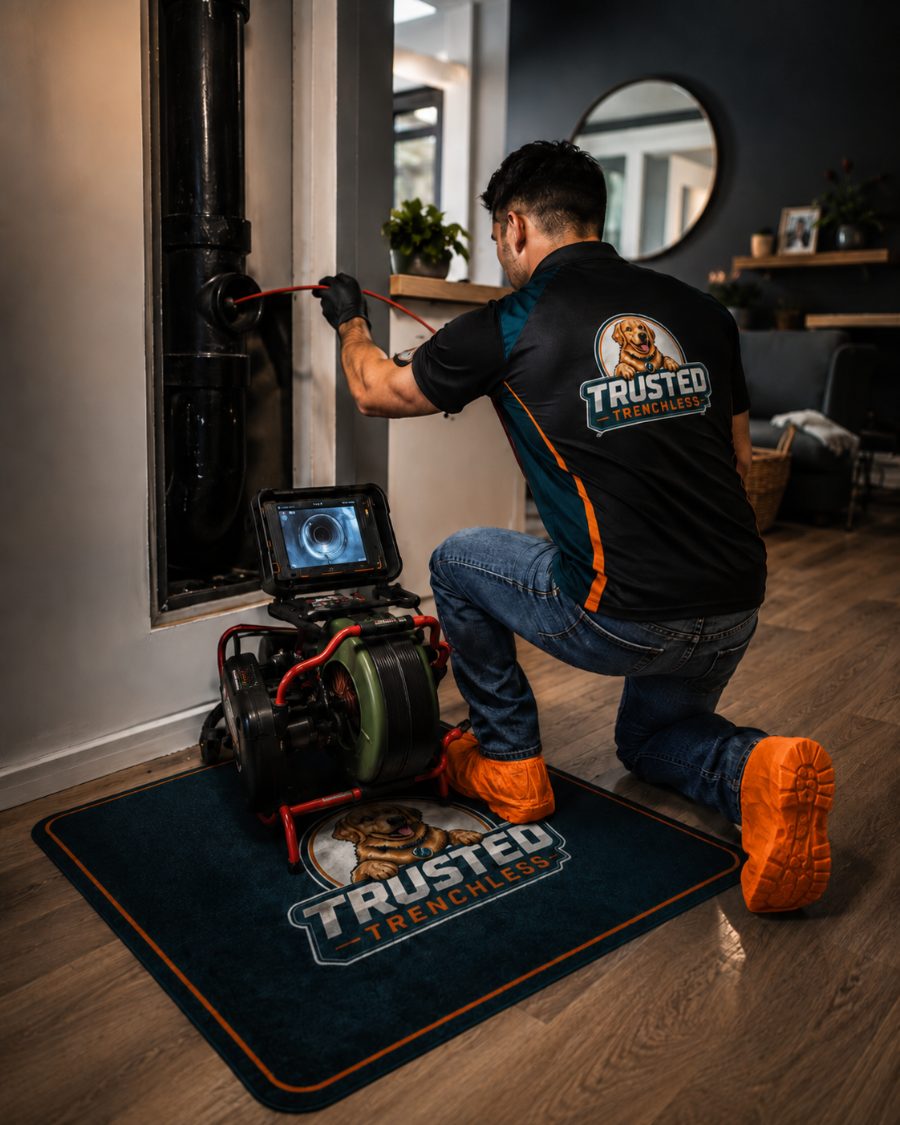
Slow drains, recurring backups, persistent odors, and unusual yard conditions can be signs of a sewer-line problem, but symptoms alone do not identify the cause. A camera evaluation can help determine whether the issue involves a blockage, roots, pipe damage, alignment, or another condition.
Learn About Sewer Camera Inspections →Seeing more than one warning sign or dealing with a recurring problem? Request a project evaluation so the next step is based on the condition of the line.
Request a Project EvaluationCIPP lining and traditional excavation can both be appropriate, but they solve different pipe conditions. We use camera footage, access, alignment, slope, and structural condition to determine whether a line can be rehabilitated or should be excavated and replaced.
Learn About CIPP Pipe Lining →Not sure which approach fits your line? Request a Project Evaluation →
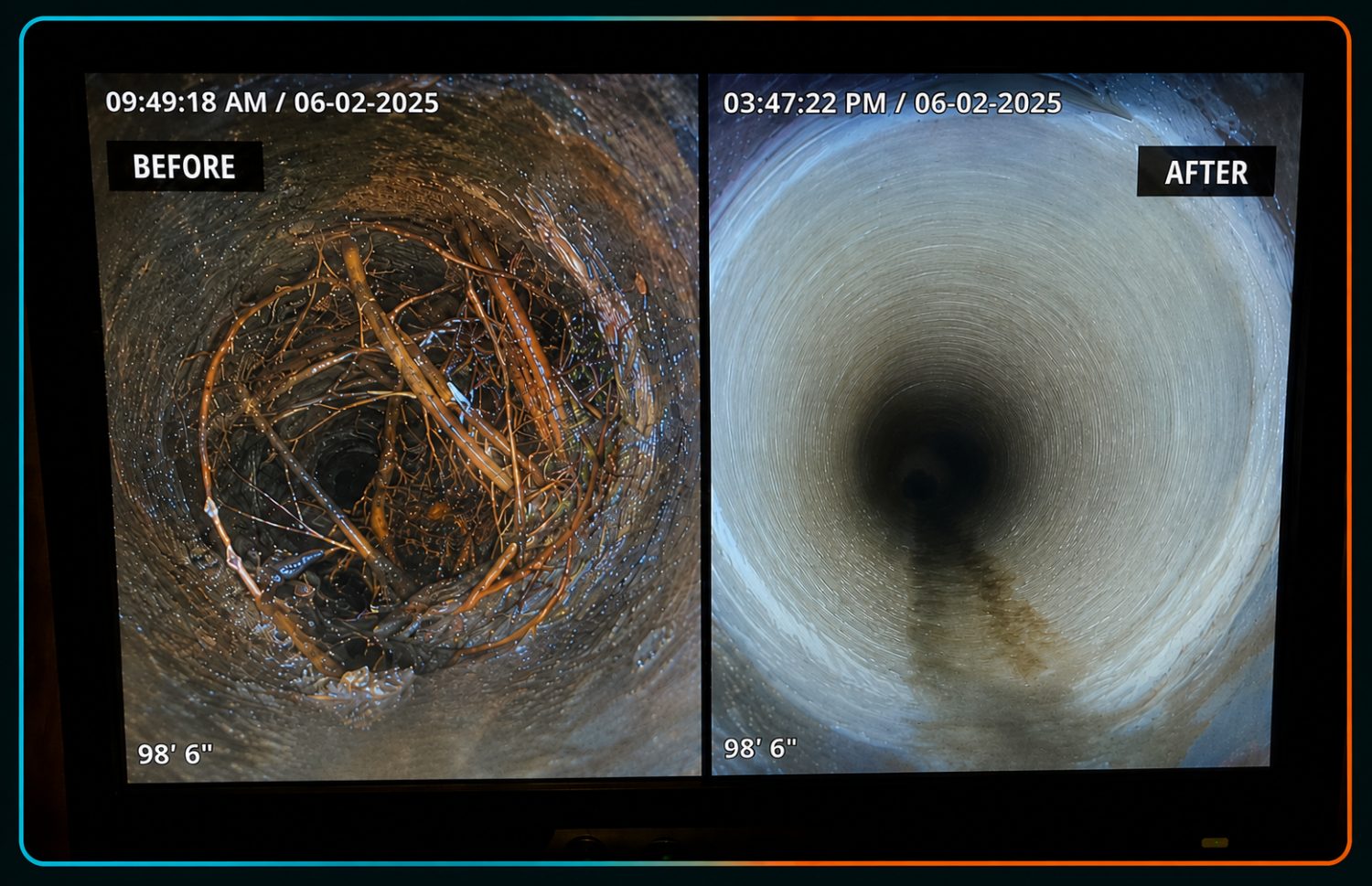
We use before-and-after camera footage to document the condition found and the visible result after the approved work is complete. The image shown illustrates this documentation; the actual scope may involve cleaning, preparation, repair, or CIPP lining, depending on the line.
Every project begins with understanding the pipe condition and access. The exact scope depends on camera findings, cleaning and preparation needs, liner length, curing method, branch connections, inspections, and any access work required.
Call or submit a request online with the property location, known symptoms, available sewer-scope footage or reports, and any information about pipe access. For an active backup, limit water use and let us know the situation is urgent.
We review the available camera footage and inspect the pipe as needed to evaluate its material, diameter, alignment, structural condition, access, and repair area. This determines whether CIPP lining or another repair method is appropriate.
You receive a clear proposed scope and price based on the work required, which may include cleaning, preparation, lining, branch reinstatement, access work, inspections, and final documentation. Known variables and possible scope changes are explained before work begins. When a portion of the project requires a licensed trade contractor, the proposed scope identifies the responsible contractor, applicable permit path, inspections, and coordination responsibilities before work begins.
For an eligible line, the pipe is cleaned and prepared, the resin-saturated liner is installed, and the approved curing process is completed according to the defined project scope. Project timing varies, and some jobs may require more than one visit or limited excavation.
After the work is complete, we perform a final camera review and provide before-and-after documentation. We also explain care instructions and any recommended follow-up.
Trusted Trenchless currently serves homeowners, businesses, and trade partners across Northern Colorado, with a primary focus on Fort Collins, Windsor, Loveland, Greeley, Evans, Longmont, and surrounding municipal-sewer communities.
Explore Our Northern Colorado Service Area →Project availability depends on location, pipe conditions, project scope, applicable contractor and permit requirements, access, and scheduling. Contact us to confirm service for your property. Don’t see your city? Contact us to confirm availability.
Every project is priced from its actual scope. Camera findings, pipe dimensions, cleaning and preparation, access, branch connections, inspections, and any excavation or restoration needs can all affect the final price.
After the line is evaluated, we provide a project-specific scope and price. When CIPP avoids extensive excavation, it may also reduce related surface-restoration work, but the appropriate method and total cost depend on the property and pipe condition.
Request a Project EvaluationThe length and location of the pipe being rehabilitated affect liner and resin use, preparation requirements, curing, equipment setup, and project-team time.
Pipe diameter, material, bends, transitions, and branch connections help determine the lining system, equipment, materials, and installation requirements.
Roots, scale, corrosion, debris, offsets, bellies, or structural damage can increase preparation or make CIPP unsuitable. Severe collapse or displacement may require another repair method.
Existing access, pipe depth, interior or exterior work areas, finished surfaces, utility conflicts, and the need for a new access point or targeted excavation can affect the scope.
Branch reinstatement, permits, municipal or district inspections, final camera review, and project documentation may be included depending on the line and location.
Financing is available for qualifying Trusted Trenchless services and qualified applicants. Depending on the applicant, project, and available plan, options may include promotional financing, fixed-rate installment plans, and longer-term monthly payment plans.
Request a project evaluation based on the available camera findings, pipe condition, access, and repair area. We’ll explain the next qualification step and whether CIPP or another repair method may be appropriate.